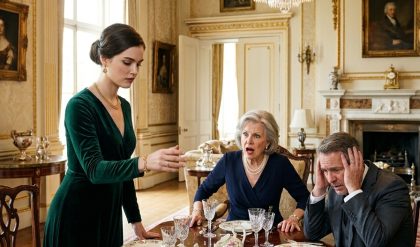
PART 3_Rachel understood.
She understood so clearly it disgusted her.
“You don’t have to fix him,” she said. “You have to stay with him.”
Tom covered his mouth.
“I don’t know if I can.”
There it was.
The real betrayal.
Not Elise.
Not the kiss.
The desire to escape and make Rachel the jailer for staying.
Rachel looked down at the logbook.
Her handwriting leaned hard to the right, every line precise because precision had replaced sleep.
“I need you to leave the room.”
He nodded slowly.
At the door, he turned.
“She’s not working with Caleb anymore. I’ll make sure.”
Rachel looked up.
“Do you think that’s your gift to give?”
His face reddened.
“I meant—”
“I know what you meant. You still think you’re deciding the damage.”
He left.
Rachel sat alone with Caleb until morning, when Nora arrived carrying coffee, clean socks, Rachel’s charger, and the folder with tabs.
“You broke into my house?” Rachel asked.
“You gave me a key when the furnace died.”
“That was for emergencies.”
Nora looked around the hospital room.
“I am a woman of broad definitions.”
Rachel took the socks and pressed them to her face.
They smelled like laundry detergent and home.
Her eyes burned.
Nora sat in the second chair.
“Tom’s parents came back after you left.”
Rachel lowered the socks.
“What did they do?”
“Looked for papers.”
Rachel’s stomach dropped.
“What papers?”
“Bank statements, mortgage documents, insurance forms. I moved the folder before they got there.”
Rachel’s hands went cold.
“Nora.”
“Richard distracted me by asking about Caleb. Caroline opened the file drawer. She’s quick for a woman wearing shoes that cost more than my first car.”
Rachel stood.
The room swayed.
Nora caught her elbow.
“Sit.”
“They’re stealing from us.”
“They’re preparing.”
“For what?”
“For war.”
Rachel looked at Caleb.
He slept through it, mouth open slightly, one hand curled around the hospital blanket.
Nora pulled out her yellow pad.
“I called my friend Diane. Family law attorney in Franklin County. Mean in the productive way. She can meet you here at noon.”
“I can’t afford—”
“She owes me.”
“For what?”
Nora’s face closed.
“A long story with a dead boy in it.”
Rachel went still.
Nora looked toward Caleb.
“My son, Jeremy, had leukemia. Different monster. Same fluorescent lights.”
Rachel sat slowly.
“You had a son?”
“I have a son,” Nora said sharply.
Rachel looked at the floor.
“I’m sorry.”
Nora waved it away, but her fingers trembled.
“He was nine. My husband handled the money because I handled the hospital. That was our division. Fair, I thought. Sensible. Then Jeremy needed a trial drug, and I found out the savings were gone. Not on another woman. On gambling. On shame. On every lie that starts with ‘I didn’t want to worry you.’”
Rachel could not move.
Nora’s voice stayed dry.
“I spent three months fighting insurance with empty accounts and a husband who cried beautifully in front of doctors. Jeremy died before the appeal decision came.”
The monitor beeped.
Nora looked at it like she hated machines for continuing.
“So when I tell you to gather documents before you gather closure, I am not being cold.”
Rachel reached across the space between chairs.
Nora stared at her hand.
Then took it.
Not gently.
Like gripping a ledge.
“I’m not you,” Rachel said.
“No,” Nora answered. “You’re earlier.”
At noon, Diane Wu arrived in a navy suit and sneakers, carrying a laptop covered in stickers from legal aid clinics. She spoke fast, listened faster, and did not look shocked by anything Rachel said.
When Rachel described the driveway, Diane only asked, “Any photo?”
“No.”
“Recording of admission?”
“Nora recorded Caroline.”
Diane’s eyebrows lifted.
“Caroline is the mother?”
“Yes.”
“I already dislike her efficiently.”
Rachel almost smiled.
Diane asked about accounts. Mortgage. Insurance. Tom’s retirement. Caleb’s care schedule. Elise’s agency. Rachel answered what she could and wrote down what she could not.
Then Diane said, “You need emergency temporary orders. Custody, exclusive use of the home, preservation of assets, and continued insurance coverage for Caleb. We also need to notify the home nursing agency about the conflict of interest.”
Rachel’s chest tightened.
“If Tom loses his job—”
“He doesn’t have to lose his job because his affair was unethical.”
“But if he does, Caleb loses insurance.”
Diane leaned forward.
“This is the trap, Rachel. People will ask you to stay quiet because every consequence may hurt your child. Meanwhile, they will move money, shape the story, and make your silence look like consent.”
Rachel looked at Caleb.
“What if fighting hurts him?”
“What if not fighting leaves him dependent on people willing to rob his care fund?”
Rachel closed her eyes.
She saw Elise laughing in the driveway.
She saw Caroline’s mouth saying sick child.
She saw Tom’s hand releasing her wrist as soon as another woman named it.
Rachel opened her eyes.
“File it.”
Diane nodded.
The third choice was still coming, but Rachel did not know that yet.
By the time Caleb was discharged four days later, the story had already begun to mutate.
Tom did not come home. He stayed at his parents’ house “temporarily.” Elise was removed from Caleb’s care schedule pending review, but no one from the agency used the word affair in writing. Caroline sent Rachel one text: We all need to be adults right now. Caleb needs stability, not drama.
Rachel stared at the message until the words blurred.
Then she screenshotted it and sent it to Diane.
Nora drove them home because Rachel’s hands shook too badly in the parking garage. Caleb slept in the back seat clutching the crooked cardinal. His hospital bracelet hung loose around his wrist.
The house looked the same from the street.
Maple tree. White siding. Dead porch light. The Chevy gone. A chalk rocket still faintly visible on the driveway from a day before everything split.
But the moment Rachel opened the door, she knew.
The air was wrong.
Not robbed-wrong. Not obvious. Worse.
Selected.
The file drawer in the office was closed but not aligned. The laptop charger was missing. The folder with mortgage papers was gone from the shelf Rachel had moved it to after Nora’s warning. In the bedroom, Tom’s dresser was half-empty, but he had taken the framed wedding photo and left the picture of Caleb in the NICU.
Rachel stood in front of the dresser for a long time.
Nora came behind her.
“Breathe.”
Rachel laughed.
“I hate that word.”
“Then spite-breathe.”
Downstairs, Caleb woke and called for water.
Rachel moved.
Because she always moved.
That evening, Diane called.
Tom had filed first.
Rachel sat at the kitchen table with Caleb’s medication chart in front of her and the broken dinosaur cup beside it. She had taped the crack with clear packing tape because Caleb cried when he saw it in the trash.
“He filed?” Rachel repeated.
“Yes,” Diane said. “Petition for dissolution. Shared parenting. He’s asking for equal decision-making authority and claiming you have become emotionally unstable due to caregiver stress.”
Rachel’s mouth went numb.
Nora, sitting across from her, slowly put down her tea.
Diane continued, “He also filed a motion requesting access to the marital home to retrieve personal property.”
“He already took things.”
“We’ll address that.”
“What about money?”
A pause.
Rachel knew before Diane answered.
“The joint savings account was reduced significantly yesterday.”
Rachel looked at the mason jar of quarters on the pantry shelf.
“How much?”
“Nearly all of it.”
Rachel stood so fast the chair fell backward.
Caleb flinched in the living room.
Rachel forced her voice low.
“He took Caleb’s emergency fund.”
“We will pursue it.”
“With what? Time?” Rachel’s hand went to her throat. “Caleb needs the specialty formula refill next week. The copay alone—”
“I’m filing an emergency motion tomorrow morning.”
Rachel ended the call because if she heard one more calm sentence, she would start breaking plates.
Nora picked up the chair.
Rachel walked to the pantry.
The Rocket Fund jar sat behind a box of rice and two cans of tomato soup. Caleb had taped a paper rocket to it. The rocket had three windows: Mom, Dad, Caleb.
Rachel lifted the jar.
It was lighter than it should have been.
She unscrewed the lid.
Only quarters remained.
The folded twenty-dollar bill Tom had once added was gone.
Rachel made a sound like she had been punched.
Nora came to the pantry doorway.
“Rachel.”
“He took it.”
Nora’s face went murderous.
“From the jar?”
Rachel dumped the quarters onto the shelf. They scattered and rang against the wood.
No twenty.
No five.
No singles.
Just quarters.
Maybe twenty-three dollars.
Maybe less.
In the living room, Caleb said, “Mom?”
Rachel gripped the shelf.
She could not let him see.
She could not let him learn that fathers could steal from imaginary rockets.
Nora stepped in front of her, blocking the pantry from the living room.
“I need you to listen.”
Rachel shook her head.
“No.”
“Yes.”
“No, because if I listen I have to be smart, and I don’t want to be smart. I want to go to Caroline’s house and throw this jar through her window.”
Nora took the jar from her hands.
“That is one plan.”
Rachel choked on a laugh that became a sob.
Nora held the jar up.
“But here is another. We document the missing cash. We photograph the jar. We ask Caleb when he last saw the money without leading him. We do not smash windows. Windows make you look unstable. Paper makes them look guilty.”
Rachel slid down the pantry wall and sat on the floor.
Nora sat beside her, bones cracking as she lowered herself.
For three minutes, neither spoke.
Then Rachel said, “I used to think asking for help meant I failed him.”
Nora looked at the opposite wall.
“I used to think helping meant taking over before people could disappoint me.”
“Did it work?”
“No.”
Rachel wiped her face.
“Mine didn’t either.”
Nora handed her a quarter.
“Then let’s try being bad at our old habits.”
The first hearing was eight days later.
By then, Rachel had learned how fast a family could become a public relations campaign.
Tom’s coworkers sent messages saying they were praying for everyone. Caroline told relatives Rachel was “not coping well.” Richard called once and left a voicemail saying, “No one wants to hurt Caleb, but you need to stop punishing Tom for needing comfort.” Elise did not contact Rachel at all.
That silence became its own insult.
On the morning of court, Rachel stood in front of the bathroom mirror and tried to make herself look like a woman a judge would trust. Her black blazer had a loose thread on the cuff. Her hair would not stay smooth. There were purple shadows under her eyes no concealer could hide.
Caleb sat on the closed toilet seat, wrapped in a blanket, watching her.
“You look like when the hospital people say ‘unfortunately,’” he said.
Rachel paused with the mascara wand in midair.
“That bad?”
He nodded.
She put the mascara down.
“Better?”
“Still like unfortunately.”
She smiled.
A real one, small but alive.
Nora knocked on the bathroom door.
“Diane’s here.”
Caleb held out the crooked cardinal.
“For court,” he said.
Rachel stared at it.
“I can’t take your bird.”
“He’s good at staring.”
Nora muttered, “Finally, a qualified attorney.”
Rachel took the cardinal and slipped it into her purse.
At the courthouse, Tom sat between Caroline and his lawyer.
Elise sat two rows behind them.
Rachel had not expected that.
The sight of her struck differently in daylight. Elise looked younger without the driveway shadows, her blond hair tied back, her face pale but composed. She wore a cream sweater and small gold earrings. Not a monster. That made Rachel hate her more for a moment.
Monsters were easy.
Women who warmed nebulizer masks with gentle hands and kissed husbands in driveways were not.
Tom looked at Rachel when she entered.
His eyes went immediately to her purse, then her face. He seemed older. Or maybe Rachel had stopped editing him with love.
Caroline leaned toward him and whispered something.
Tom nodded.
Rachel sat beside Diane and placed both hands flat on the table.
The judge entered. Everyone rose.
Legal language filled the room. Temporary orders. Marital assets. Health insurance. Best interests of the child.
Rachel listened until Tom’s lawyer stood.
“My client has grave concerns regarding Mrs. Miller’s emotional stability,” the lawyer said. “She is an understandably overwhelmed mother, but her recent behavior has become erratic. She threw objects at Mr. Miller, barred him from seeing his medically fragile son, and is now attempting to alienate the child from his father at a time when the child needs both parents.”
Rachel’s face burned.
Diane touched the edge of Rachel’s legal pad.
Not now, the touch said.
Then Tom’s lawyer continued.
“Mr. Miller has been the primary financial provider. He has worked extensive overtime to maintain insurance coverage and pay extraordinary medical bills. He seeks only fairness and continued involvement in his son’s care.”
Rachel looked at Tom.
He looked down.
Coward, she thought.
Then hated the simplicity of the word because cowardice had layers. Tom loved Caleb. She knew that. He loved him in photos, in hospital waiting rooms when nurses praised him, in moments where love required tears more than endurance.
But love that disappeared when no one clapped was not enough.
Diane rose.
She did not raise her voice.
She did not need to.
“Your Honor, Mrs. Miller has been Caleb Miller’s primary caregiver for the entirety of his illness. We have submitted medication logs, hospital discharge instructions signed by her, communications with specialists, and records showing that Mr. Miller missed multiple required care trainings.”
Tom’s head lifted.
Diane went on.
“We have also submitted evidence that Mr. Miller engaged in an undisclosed intimate relationship with the child’s assigned home nurse, creating a serious conflict of interest in the child’s care environment.”
Elise looked down.
Rachel watched her hands knot together.
“Additionally,” Diane said, “within forty-eight hours of discovery of the affair, a substantial amount was removed from marital savings, documents disappeared from the marital home, and cash appears to have been taken from the child’s personal savings jar.”
Caroline whispered, “Ridiculous.”
The judge looked at her.
Caroline shut her mouth.
Tom’s lawyer objected. Diane responded. The room became words sharpened into tools.
Then the judge asked Tom directly, “Mr. Miller, did you remove funds from the joint savings account?”
Tom stood.
Rachel held her breath.
His lawyer whispered quickly.
Tom said, “Yes, Your Honor. On advice from my family, I moved the funds to protect them from being spent impulsively.”
Rachel’s vision narrowed.
Spent impulsively.
The specialty formula.
The copays.
The emergency fund.
“By whom?” the judge asked.
Tom hesitated.
“My wife.”
Diane’s pen stopped.
Rachel felt Nora stiffen behind her.
The judge looked at Rachel.
For one terrible second, Rachel wanted to shout every truth in the room until the walls shook.
Instead, she opened her purse.
Her fingers found the crooked ceramic cardinal.
Caleb’s staring attorney.
She held it inside the purse, hidden, thumb against the smudged wing.
One breath at a time.
The judge granted temporary exclusive use of the home to Rachel and Caleb. Ordered Tom to maintain insurance. Ordered partial return of the transferred funds pending review. Granted supervised visitation until medical care competencies were reassessed. Ordered no contact between Elise and Caleb.
It was not victory.
It was oxygen.
Outside the courtroom, Caroline waited near the elevators.
Tom stood beside her, face tight.
Rachel tried to pass.
Caroline stepped into her path.
“You think you won.”
Rachel said nothing.
“You have no idea what you’re doing. Tom may be flawed, but he is the reason that boy has treatment at all.”
Rachel’s jaw clenched.
Caroline leaned closer.
“You can hate me. But here is the truth you don’t want to admit: you need the man you are destroying.”
Rachel hated that too because it had once been true.
Maybe part of it still was.
Caleb needed insurance. Money. A father who learned the machines. A world larger than Rachel’s exhausted arms.
But needing someone did not mean letting them gut you and call it provision.
Rachel stepped around Caroline.
Tom said, “Rach.”
She stopped.
Not for him.
For the version of Caleb who might one day ask whether she had ever given his father a chance to stand up.
Tom’s voice cracked.
“I didn’t take the money from the jar.”
Rachel turned.
“Then who did?”
He looked at Caroline.
Caroline’s face did not move.
There it was.
A tiny movement between mother and son.
A history.
A hand reaching for him before he learned to reach for himself.
Rachel walked away before rage made her foolish.
In the weeks that followed, Maple Hollow Lane became a theater of ordinary survival.
Rachel learned to replace the porch light herself after watching one video three times and dropping the screwdriver twice. When it finally glowed warm over the driveway, Caleb clapped from the front window like she had raised the sun.
She learned which pharmacy technician could process the manufacturer coupon without sighing.
She learned to sleep in ninety-minute increments.
She learned that grief could coexist with laundry.
Tom came for supervised visits twice a week at first, monitored by a home health social worker named Mr. Alvarez, who had kind eyes and no patience for performative fatherhood. Tom learned the medication schedule badly, then better. He spilled formula. He mislabeled a syringe. Rachel corrected him once, sharply. Mr. Alvarez said, “Let him redo it.”
Rachel nearly snapped.
Then she saw Caleb watching.
So she stepped back.
Tom redid it.
Correctly.
Caleb smiled at him like a sunrise he had been saving.
Rachel went to the kitchen and gripped the sink until her hands hurt.
Nora found her there.
“Don’t confuse stepping back with surrendering,” Nora said.
“I hate when you’re right.”
“No, you hate needing witnesses.”
Rachel looked toward the living room, where Tom was reading a space book in a voice too bright to be natural.
“I hate that Caleb still loves him.”
Nora leaned against the counter.
“No, you don’t.”
Rachel’s eyes filled.
Nora softened.
“You hate that love doesn’t obey evidence.”
That sentence stayed.
Elise lost her position with the home nursing agency after the internal review. Not her license, not entirely. Consequences were rarely as complete as pain wanted them to be. She sent one letter through Diane’s office.
Rachel did not open it for three days.
When she did, Nora sat across from her at the kitchen table.
The letter was handwritten.
Rachel expected excuses.
There were some.
I was lonely.
He said the marriage was over emotionally.
He said you hated him.
He said he slept in the basement most nights.
Then one line stopped Rachel.
I also saw how tired you were, and instead of protecting your home as Caleb’s nurse, I let myself feel chosen because your husband looked at me like I was the place where nothing hurt.
Rachel read it twice.
Nora watched her.
“What do you want to do with it?”
“Burn it.”
“Reasonable.”
Rachel folded the letter.
“But not yet.”
The escalation came in October, when Caleb got worse.
It began as a cough after dinner.
By nine, his fever was 101.6.
By ten, Rachel had called the on-call pulmonologist.
By midnight, they were in the emergency department, Caleb limp against her chest.
Tom arrived twenty minutes later, hair wet, hoodie inside out. Caroline arrived five minutes after him, carrying a leather purse and the authority of someone who assumed fear gave her leadership.
Elise was not there.
Rachel hated that she noticed.
In the curtained ER bay, Caleb’s oxygen numbers dipped again and again. Nurses moved quickly. A resident asked questions. Rachel answered. Tom answered two correctly and one wrong. Rachel corrected him. He accepted it.
Caroline hovered.
“Is anyone calling his specialist?” she demanded.
Rachel ignored her.
Tom said, “Mom, let them work.”
Caroline turned on him.
“I am trying to make sure your son doesn’t fall through cracks while everyone performs their feelings.”
Rachel snapped, “Get out.”
The resident looked up.
Caroline blinked.
“What?”
Rachel pointed to the curtain.
“Out.”
Tom whispered, “Rachel—”
“No. She called him a tragedy in my kitchen. She blamed my blood for his illness. She helped move money meant for his care. She does not get to stand over his bed pretending concern is love.”
Caroline’s face hardened.
“At least I am not so proud I’d rather be alone than accept help.”
Rachel flinched.
Direct hit.
Caroline saw it.
“You want sainthood. That’s what this is. Poor Rachel, the mother who sacrificed everything. You would rather burn yourself alive than admit Tom was drowning too.”
Tom said, “Mom, stop.”
This time it had weight.
Caroline looked at him, startled.
Tom stood between her and the bed.
“You need to leave.”
She stared at her son as if he had spoken a foreign language.
“Thomas.”
“Now.”
Richard reached for Caroline’s elbow.
She shook him off, but she left.
The curtain swayed behind her.
Rachel looked at Tom.
He would not meet her eyes.
“Thank you,” she said.
He swallowed.
“I should have done it sooner.”
“Yes,” she said.
He nodded once.
No forgiveness.
Just fact.
At three in the morning, Caleb was transferred upstairs. Pneumonia again, harder this time. They started antibiotics. Steroids. More oxygen. The doctor spoke carefully about resilience and risk.
Rachel heard: not forever guaranteed.
Tom heard it too.
He sat in the hallway with his elbows on his knees, staring at the floor.
Rachel came out to call Nora and found him there.
“I’m scared,” he said.
She almost walked past.
Then stopped.
“I know.”
He looked up.
“I used to think if I said that out loud, it meant I wasn’t a good father.”
Rachel leaned against the opposite wall.
“I used to think if I needed help, it meant I wasn’t a good mother.”
He gave a broken laugh.
“We were both idiots.”
Rachel did not laugh.
He looked down.
“I don’t expect you to comfort me.”
“Good.”
He nodded.
Then he said, “Elise asked me once what I missed most. Before Caleb got sick.”
Rachel’s body tightened.
“I said silence.” His face twisted. “Not him. Not our life. Just silence. And she understood. Or maybe she pretended to. I don’t know anymore.”
Rachel looked through the small window into Caleb’s room. A nurse adjusted his IV.
“I missed being touched without someone needing something from my hands,” she said.
Tom closed his eyes.
The honesty was not intimacy.
It was autopsy.
They stood in the hallway with the dead marriage between them, naming organs.
Tom said, “I emptied the savings because Mom said you’d use it to punish me.”
Rachel looked at him.
“I believed her because it was easier than believing you would use it to save Caleb.”
The words landed.
His face crumpled.
“I’m returning all of it. Diane knows. I signed the transfer.”
Rachel had spent weeks imagining that sentence would make her feel relief.
It made her tired.
“And the jar?”
Tom’s mouth tightened.
“Mom took the cash. She said it was symbolic. That you were teaching Caleb to dream without his father.”
Rachel laughed softly.
“That sounds like her.”
“I put it back.”
Rachel turned.
“What?”
“The twenty. The singles. More. I put it in the jar before I came here.”
Rachel stared at him.
“I’m not telling you so you’ll forgive me.”
“Then why?”
“Because Caleb will look.”
He knew their son.
That hurt.
That helped.
Both were true.
When Rachel called Nora, she answered with, “Alive?”
“Yes.”
“Admitted?”
“Yes.”
“I’m coming.”
“You don’t have to.”
“Still allergic to stupid sentences, I see.”
Nora arrived before sunrise with Caleb’s stuffed rocket, clean underwear, and muffins she had clearly bought at a gas station and transferred into a Tupperware container for dignity.
She found Tom asleep in a hallway chair, head bent at an angle that would punish him later.
Nora looked at Rachel.
“Do I kick him?”
“Not today.”
“Personal growth is disappointing.”
Rachel smiled for half a second.
Caleb improved slowly.
Too slowly.
Three days became six. Tom stayed nights when Rachel let him. Rachel went home twice to shower and once slept four straight hours in Nora’s guest room under a quilt that smelled like lavender and dust. She woke up panicked, certain Caleb had needed her.
Nora was sitting in the hallway outside the guest room, reading a paperback.
Rachel stared at her.
“Were you sitting there the whole time?”
“No.”
Rachel looked at the cold tea beside Nora.
Nora sighed.
“Mostly.”
Rachel sat beside her on the floor.
“I don’t know how to do this next part.”
“What part?”
“Let people help and still be his mother.”
Nora closed the book.
“Badly at first.”
Rachel rested her head against the wall.
“Nora.”
“What?”
“Tell me about Jeremy.”
Nora’s hand stilled.
For a moment Rachel thought she had asked too much.
Then Nora said, “He hated carrots unless they were cut like coins. He believed thunder was angels moving furniture. He once hid my car keys in a cereal box because he wanted me to stay home.”
Rachel smiled.
Nora looked at the wall.
“He died at 4:12 p.m. on a Tuesday. I remember because the billing department called at 4:19 about a claim code.”
Rachel’s smile vanished.
“I’m sorry.”
“Yes,” Nora said. “It was.”
Rachel reached for her hand.
This time Nora took it first.
The final hearing came in December, after frost silvered the lawns and Christmas lights appeared on Maple Hollow Lane like people were trying to prove darkness had limits.
Caleb was home, weaker but stable. The new nurse was a grandmother named Denise who carried peppermint tea in a thermos and treated Tom with polite suspicion. Rachel liked her immediately.
The divorce had turned from emergency into accounting.
Assets. Custody. Medical decision-making. Debt.
Diane had uncovered enough to make Tom’s lawyer stop using the word fairness so freely. Caroline had transferred money through Richard’s business account. Emails showed she had urged Tom to “secure what is ours before Rachel drains it into hopeless treatments.” Richard had signed documents he claimed not to read. Tom had participated, then cooperated, which did not erase the participation.
Elise gave a statement.
It was not heroic.
It was useful.
On the morning of the final custody and asset hearing, Rachel found the Rocket Fund jar on the kitchen table.
It was full.
Not just quarters.
Bills too.
A folded twenty on top.
Beside it sat a note in Tom’s handwriting.
For when he is strong enough to go somewhere that is not a hospital.
Rachel stood looking at it for a long time.
Caleb shuffled in wearing rocket pajamas and his oxygen cannula.
“Did Dad bring it back?”
Rachel nodded.
“All of it?”
“I think more than all.”
Caleb considered that.
“Maybe the moon got expensive.”
Rachel laughed, then cried, then laughed again because Caleb looked alarmed and said, “Mom, your face is doing both.”
She hugged him carefully.
At court, Caroline looked smaller.
Not weaker. Never that. But contained, as if the walls had finally learned her shape and refused to expand.
Tom sat apart from her.
That mattered.
Not enough to save anything.
Enough to be noticed.
The hearing lasted hours. Diane presented records. Tom admitted the affair, the transfers, the missed trainings, the ways he had let his mother speak and act for him. His voice shook, but he did not retreat.
Caroline was called to speak about the transfers.
She wore navy and pearls.
She looked at the judge as if the room were a committee she expected to chair.
“I acted to protect my son,” she said. “That is not a crime.”
Diane stood.
“You removed money from accounts used for Caleb Miller’s medical care.”
“I preserved family assets.”
“For whom?”
“For the family.”
“Does Rachel Miller belong to that family?”
Caroline’s mouth tightened.
“She married into it.”
“And Caleb?”
Caroline hesitated.
Only a fraction.
Everyone saw.
Diane’s voice stayed calm.
“Does Caleb belong to that family?”
“Of course.”
“Then why did you refer to treatments for him as hopeless in an email dated October third?”
Caroline’s eyes flashed.
“Because someone had to say what everyone is afraid to say.”
The courtroom went very still.
Caroline leaned forward.
“There are families destroyed every day because no one will admit that love has limits. Money has limits. Care has limits. My son was being consumed. My husband’s retirement was at risk. That boy has suffered since infancy, and every time anyone suggests making rational decisions, Rachel turns grief into morality and makes monsters of people who still know how to count.”
Rachel’s nails dug into her palm.
The terrible thing was not that Caroline lied.
It was that she did not.
Not entirely.
Care had limits.
Money had limits.
Bodies had limits.
Rachel had nearly collapsed under those limits and called it devotion.
Diane said, “So you decided Rachel and Caleb should have fewer resources because you disagreed with continuing care?”
“I decided my son should not be financially ruined by guilt.”
Tom lowered his head.
Diane turned slightly.
“No further questions.”
Caroline stepped down.
As she passed Rachel, she whispered, “You know I’m right about one thing.”
Rachel did.
That was the hook in the flesh.
During recess, Rachel went to the restroom and locked herself in a stall.
She pressed both hands over her mouth.
For months, rage had kept her upright. Rage at Tom. At Elise. At Caroline. At bills. At God, sometimes, though she did not admit that out loud.
But Caroline had named the thing Rachel avoided.
What if love became another machine Caleb was attached to?
What if Rachel was keeping him alive by refusing to see anyone else’s suffering?
What if fighting Tom so completely left Caleb with one exhausted mother and a father too ashamed to return?
A knock came.
“Occupied,” Rachel said.
“It’s me,” Nora answered.
Rachel opened the stall.
Nora stood by the sinks, holding Rachel’s purse. The crooked cardinal peeked from the unzipped top.
“You ran,” Nora said.
“I walked quickly with purpose.”
“Very dignified.”
Rachel washed her hands though they were not dirty.
“Nora, what if I’m not saving Caleb? What if I’m just refusing to lose?”
Nora’s face changed.
This was the question under all the others.
Nora did not answer quickly.
Good.
Finally she said, “When Jeremy was dying, I fought everyone. Doctors, insurance, my husband, God, parking attendants. Some fights mattered. Some just made noise so I wouldn’t hear the truth.”
Rachel gripped the sink.
“How did you know the difference?”
“I didn’t. Not always.”
Rachel looked at her in the mirror.
Nora’s eyes were wet.
“If someone had asked me to choose between more treatment and letting him rest, I would have hated them forever.”
Rachel whispered, “And if they were right?”
Nora closed her eyes.
“Then I would have hated them and still needed to hear it.”
Rachel turned.
“Are you telling me to stop fighting?”
“No.” Nora stepped closer. “I’m telling you not to let Caroline decide what the fight is. The fight is not Tom’s comfort or her money or your pride. The fight is Caleb’s life. His whole life. Not just his pulse.”
Rachel covered her face.
Nora pulled her hands down.
“You have to choose what kind of mother you are when survival isn’t the only question.”
That was the hardest choice.
Not filing.
Not letting Nora witness.
Not standing in court.
This.
Rachel returned to the courtroom.
When proceedings resumed, Diane prepared to argue for Rachel to have sole medical decision-making, with Tom limited until further review. It was the safer legal move. The cleaner move. The one rage wanted.
Rachel touched Diane’s sleeve.
“I need to say something.”
Diane frowned.
“Rachel—”
“I know.”
The judge allowed it.
Rachel stood.
The courtroom blurred at the edges.
She looked at Tom first.
Then at Caroline.
Then at the judge.
“My husband betrayed me,” she said. “He lied, he hid, and when things got hard, he let his mother turn our son’s illness into an excuse to protect himself. I won’t soften that.”
Tom’s eyes reddened.
Rachel continued.
“But Caleb loves his father. And Tom is learning the care he should have learned before. Slowly. Late. Not beautifully. But he is learning.”
Caroline’s eyes narrowed.
Rachel did not look away.
“I am asking for primary custody and final medical decision-making because I have been Caleb’s primary caregiver and because consistency keeps him alive. But I am not asking the court to erase Tom from his son’s life. I want structured visitation. Required medical training. No unsupervised medical decisions until his care team signs off. Co-parenting communication through the court app. And a financial order that protects Caleb’s care funds from any relative who thinks a sick child is a bad investment.”
Diane’s mouth almost twitched.
The judge listened.
Rachel’s voice shook now.
“I also want it on record that Caleb is not a tragedy. He is a child. He likes orange Popsicles and rockets and hates when carrots touch mashed potatoes. He knows when adults lie. He deserves better than being used as proof of anyone’s suffering.”
She looked at Caroline.
“And if love has limits, then the answer is not betrayal. It is telling the truth before you become cruel.”
No one spoke.
Rachel sat.
Her knees nearly failed.
Diane leaned close.
“That was either very risky or very good.”
“Which?”
“I’m billing it as strategy.”
The final order was not perfect.
Rachel received primary custody and exclusive use of the home until the property settlement. Medical decision-making was hers, with Tom allowed input but not veto power unless doctors supported it. Tom was ordered to complete all training, return funds, contribute to Caleb’s medical trust, and communicate through monitored channels. Caroline and Richard were barred from accessing Caleb’s accounts or medical documents. Tom’s visitation would expand only with compliance.
Elise remained a ghost at the edge of the paperwork.
Consequences came with signatures, not thunder.
Outside the courthouse, snow began to fall in thin uncertain flakes.
Tom approached Rachel alone.
Caroline stood near the curb, rigid with fury. Richard hovered beside her, useless as ever.
Tom stopped several feet away.
“I don’t deserve what you said in there,” he said.
Rachel pulled her coat tighter.
“No.”
He nodded.
“But Caleb does.”
“Yes.”
Tom looked toward the gray sky.
“I’m moving into an apartment in Worthington. Two bedrooms. One for him, if he ever wants to stay.”
Rachel said nothing.
“I know that’s far away.”
“It’s twenty minutes.”
“Feels farther.”
“It should.”
He accepted that.
Then he reached into his coat pocket and pulled out something small.
The blue dinosaur cup.
Not the broken one. A new one.
Same cartoon eyes. Same ridiculous grin.
Rachel stared at it.
“I saw it at Target,” he said. “I know it doesn’t fix anything.”
“No.”
“I wasn’t trying to.”
She took the cup.
Their fingers did not touch.
Tom looked relieved and devastated.
“Tell him I’ll call tonight?”
“Tell him yourself on the app. Seven o’clock. Ten minutes. If he’s tired, we end early.”
A faint smile.
“Rules.”
“Yes.”
“Good.”
He walked away.
Caroline intercepted him by the curb. Rachel could not hear the words, but she saw Tom shake his head. Caroline grabbed his sleeve. He removed her hand gently.
Then he stepped past his mother.
For the first time since Rachel had known him, Tom left Caroline standing unanswered.
It did not undo the damage.
But Rachel watched anyway.
When Rachel got home, Nora had put soup on the stove and replaced the dead batteries in the hallway smoke detector, which had been chirping for two days. Denise sat with Caleb in the living room, where a documentary about planets played too loudly.
Caleb looked up when Rachel entered.
“Did the judge say I can go to the moon?”
Rachel held up the new dinosaur cup.
“Not yet. But your legal team negotiated drinking rights.”
Caleb gasped.
“My cup!”
He reached for it, then frowned.
“This one isn’t cracked.”
“No.”
“Where’s the old one?”
Rachel looked toward the kitchen counter.
The taped, broken cup sat beside the sink, clean and useless.
“I kept it.”
“Why?”
She thought of broken things that still held what they were supposed to hold.
Then thought better.
“It reminds me to aim lower next time.”
Nora snorted from the kitchen.
Caleb laughed until he coughed, then Rachel and Denise both moved at once, and the ordinary terror returned.
Because endings did not cure lungs.
January came hard.
The divorce paperwork moved slowly. Bills still arrived. Tom missed one call because he “lost track of time,” and Rachel spent twenty minutes shaking in the laundry room after Caleb cried himself breathless. Caroline sent one letter through her attorney accusing Rachel of alienation. Diane replied with the legal equivalent of a slammed door.
But there were changes.
Small ones.
Tom completed training. All of it. He learned the feeding pump, the emergency plan, the medication schedule. He cried once during a session when Caleb’s oxygen dropped and Denise made him handle the response while Rachel stood outside the room with Nora’s hand clamped around her wrist.
He handled it.
Not perfectly.
Enough.
Rachel began sleeping in her own bed again. Not every night. Not well. But sometimes she woke at dawn and realized she had not spent the night in Caleb’s chair.
The first time it happened, guilt hit before relief.
Nora found her in the kitchen staring at the coffee maker.
“He survived you sleeping,” Nora said.
Rachel rubbed her face.
“Don’t say it like that.”
“How should I say it?”
“I don’t know.”
Nora poured coffee.
“Your body is not a betrayal.”
Rachel held the mug.
The sentence entered slowly.
One Sunday afternoon, when snow melted into dirty piles along the driveway, Rachel opened the hall closet and found the old hospital bag. Inside was the index card with Tom’s rocket drawing: WHEN I GET BETTER, DAD AND I GO TO THE MOON.
She almost threw it away.
Then Caleb called from the living room, “Mom, Dad says Mars is colder than Ohio. Is that true?”
Tom was on video call, his face pixelated, holding up a library book about planets.
Rachel looked at the card.
Then placed it in the Rocket Fund jar.
Not as a promise.
As history.
In March, Caleb’s care team approved a short, controlled outing.
Not Columbus science museum yet. Too many germs, too much walking, too much hope in one place.
Instead, they chose the small planetarium at the local community college on a weekday morning when no school groups were scheduled.
Tom asked if he could come.
Rachel stared at the message for a long time.
Nora, reading over her shoulder because privacy had become flexible between them, said, “You can say no.”
“I know.”
“Do you?”
Rachel looked at Caleb, who was arranging quarters from the Rocket Fund into piles on the table.
“He’ll want him there.”
“Yes.”
“I’ll hate parts of it.”
“Also yes.”
Rachel typed: You may come. Ground rules attached.
Tom replied eight minutes later: I’ll follow them.
Nora looked disappointed.
“I was hoping he’d say something stupid. I have unused sarcasm.”
At the planetarium, Caleb wore a mask with rockets on it and carried the crooked cardinal in his backpack “for legal reasons.” Rachel carried medication, sanitizer, emergency instructions, and enough fear to power the building.
Tom arrived early.
He had shaved. He brought orange Popsicles in a cooler, though everyone knew they would melt before they could be eaten in the car.
“I remembered,” he said.
Caleb beamed.
Rachel said, “Cooler stays in my car.”
Tom nodded.
No argument.
Inside, the planetarium dome went dark.
Caleb sat between Rachel and Tom. Nora sat on Rachel’s other side, pretending she had come only because community colleges needed supervision. Denise waited near the exit with the emergency bag.
The stars appeared overhead.
Artificial, cold, beautiful.
Caleb gasped.
Rachel looked down.
His eyes were huge above his mask.
Tom whispered, “There it is, buddy.”
Caleb reached blindly to both sides.
One hand found Rachel.
The other found Tom.
Rachel’s body stiffened.
Then Caleb squeezed.
Not asking them to be married.
Not asking the past to vanish.
Just asking to be held by the two people who had brought him into a world that hurt him and loved him and failed him and kept trying.
Rachel let her hand stay.
Across Caleb’s small body, Tom did not look at her.
Good.
Some moments could not survive being stared at directly.
The narrator spoke about constellations.
Stars were not close together, the voice explained. They only looked connected from where humans stood.
Rachel looked up into the false night.
That seemed true of families too.
From far away, people saw a house in suburban Ohio. White siding. Maple tree. Porch light. A mother, a father, a sick child. They drew lines and called it whole.
Up close, the distances were enormous.
But sometimes, if people chose carefully, light still made a shape.
After the show, Caleb was tired but radiant. He insisted on eating an orange Popsicle in the parking lot despite the cold. It stained his lips bright as summer.
Nora took a photo of him with the Popsicle in one hand and the dinosaur cup in the other.
Tom stood a few feet away.
Rachel noticed he was crying.
He wiped his face quickly.
Caleb did not see.
Rachel did.
She did not comfort him.
She did not punish him either.
That was new.
When they got home, Rachel helped Caleb to bed. He placed the crooked cardinal on the dresser, the new dinosaur cup beside it, and the old cracked cup on the shelf where he kept “important broken stuff,” including a toy rocket missing one fin and a rock shaped vaguely like Ohio.
“Mom?”
“Yes?”
“Are you still mad at Dad?”
Rachel sat on the edge of the bed.
The old answer would have been too simple.
The new one cost more.
“Yes,” she said. “Sometimes.”
Caleb thought about that.
“But not all the way?”
Rachel brushed hair from his forehead.
“Not all the way.”
“Is Grandma still mad?”
Rachel smiled without humor.
“Probably all the way.”
Caleb nodded solemnly.
“She needs a Nora.”
From the hallway, Nora called, “Everyone needs a Nora. Few deserve one.”
Caleb giggled.
The laugh turned into a cough. Rachel waited, hand ready, until it passed.
Then Caleb whispered, “One breath at a time.”
Rachel leaned down and pressed her forehead to his.
“One breath at a time.”
Later, after Caleb slept, Rachel stood on the porch under the light she had fixed herself.
The driveway was empty.
For months, that patch of concrete had held the image of betrayal so vividly she could not step outside without seeing Tom’s Chevy and Elise’s hand on his neck.
Tonight, snowmelt ran in thin lines toward the street. The chalk rocket was gone. The tire marks were gone. Even the place where she had stood with the tray was just hallway now, dark behind her, waiting for morning.
Nora joined her, wrapped in a coat over pajamas.
“You’re letting heat out,” she said.
“You came outside.”
“To complain more accurately.”
Rachel smiled.
They stood shoulder to shoulder.
Across the street, Nora’s porch light flickered.
“You need a bulb,” Rachel said.
“I was waiting to see if the neighborhood had a qualified electrician.”
“I watched one video.”
“Then you’re overqualified for Ohio.”
Rachel laughed.
A small laugh.
A real one.
Nora looked at her.
“You did good.”
Rachel shook her head.
“I did some things badly.”
“Everyone does.”
“I stayed quiet too long.”
“Then you spoke.”
“I let him back into Caleb’s life.”
“You let Caleb have a father with rules.”
“I still hate her.”
“Elise?”
“And Caroline.”
“Hate is fine. Just don’t feed it after midnight.”
Rachel looked at the street.
“What happens now?”
Nora tucked her hands into her pockets.
“Bills. Court emails. Bad nights. Better mornings. Caleb wanting a telescope you can’t afford. Tom disappointing you less dramatically, maybe. Caroline discovering boundaries and reacting like they’re a personal attack. You sleeping more. Me pretending not to care.”
Rachel’s eyes burned.
“That sounds hard.”
“It is.”
“Worth it?”
Nora looked toward Caleb’s window.
The curtain glowed faintly blue from the night-light.
“Yes,” she said. “But not because it becomes easy.”
Rachel nodded.
Inside, the monitor beeped once.
Not an alarm.
Just a sound.
Proof of breath.
Rachel touched the repaired scar on her wrist, then let her hand fall.
On the porch rail sat the Rocket Fund jar. Caleb had asked to keep it there “so the moon can see we’re serious.” The jar was full enough now that the coins and bills pressed against the glass. Among them was the folded index card with Tom’s rocket drawing, no longer prophecy, no longer lie.
Just one piece of the story.
Rachel picked up the jar.
The porch light warmed her hands.
Nora opened the door.
“You coming?”
Rachel looked once more at the driveway.
Then at the house.
Then at the window where her son slept beneath a crooked cardinal’s watch.
“Yes,” she said.
And for the first time in months, the word did not mean surrender.
Inside, Caleb stirred as Rachel passed his door.
“Mom?” he murmured.
She stepped in.
His eyes barely opened.
“Did we go to the moon?”
Rachel set the jar on his dresser beside the cardinal, the dinosaur cup, and all the important broken things they had decided to keep.
“Not yet,” she whispered.
Caleb’s fingers curled around the blanket.
“Tomorrow?”
Rachel kissed his forehead.
“Not tomorrow.”
He sighed.
She smiled in the dark.
“But we’re still going somewhere.”
His breathing settled.
Rachel stood there until the next breath came.
Then the next.
Then the next.
And in the blue hush of that imperfect house in Ohio, with bills on the table, grief in the walls, and a porch light burning because she had learned to fix it herself, Rachel finally understood that survival was not the same as staying frozen.
Sometimes love was not a promise that nobody would break.
Sometimes love was a mother choosing truth over comfort, help over pride, boundaries over revenge, and hope over the lie that broken things were useless.
Behind her, Nora whispered from the hallway, “Coffee’s getting cold.”
Rachel looked at Caleb one last time.
Then she turned toward the light.
“One breath at a time,” she said.
And this time, she said it for herself.