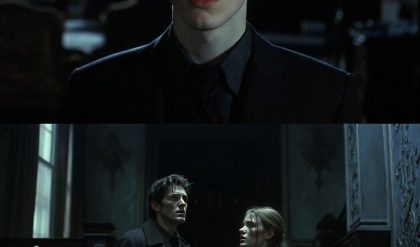
PART 3 — WHEN THE DEVIL IN THE DETAILS FINALLY SPOKE
Mike didn’t confront them that night.
He drove home in silence so deep it felt like the engine itself was ashamed to run. Amanda arrived two hours later, barefoot, hair damp as if she had showered away guilt. She kissed his shoulder while pretending exhaustion.
“Long night,” she said softly.
Mike looked at her reflection in the dark window.
“Yeah,” he replied. “It looks like it was.”
That was the moment something in Amanda shifted—but she didn’t know what yet. She just smiled, unaware that smiles don’t survive exposure to truth for long.
Over the next week, Mike stopped reacting.
That was the first thing that changed everything.
No questions. No arguments. No jealousy.
Just observation.
He let Amanda and Tom continue exactly as they were, because patterns reveal themselves when they think no one is watching. Late-night messages became predictable. “Work emergencies” clustered around specific hours. And Richard’s lake house—Mike checked the guest logs through a contact in property management—showed repeated weekend access under Tom’s authorization.
The details stacked like bricks.
Then Mike found the financial irregularity.
A consulting firm billed under Amanda’s name.
Except Amanda had never worked with that client.
The signature authorization belonged to Tom.
And buried in the metadata was something worse: Richard’s digital approval stamp.
That night, Mike sat alone in his office with the veterans’ rehab medal from his past service turning slowly in his hand. He remembered Richard’s voice: The devil is in the details.
No.
The devil had a name.
Three days later, Mike called Richard.
“I need you to look at something,” he said calmly.
Richard arrived within an hour.
Mike didn’t argue. Didn’t accuse. He simply opened the files—messages, logs, contracts, timestamps laid out like a surgical table.
Richard read in silence.
Once.
Twice.
The third time, his hands stopped moving.
“This isn’t possible,” Richard said.
Mike’s voice stayed level. “It already happened.”
Richard stood slowly, like a man realizing the foundation under his life had been replaced without permission. “My son wouldn’t—”
“He did,” Mike interrupted.
And for the first time, Richard didn’t argue.
Because denial doesn’t survive evidence arranged correctly.
The confrontation came the following morning at the firm.
Tom arrived confident, as always. Amanda arrived composed, as always.
Neither of them noticed the change in the room until Richard placed the folder on the table.
Tom flipped it open.
Then froze.
Amanda’s face drained of color piece by piece, like someone turning off lights inside her.
“You tracked us?” Tom said sharply.
Mike shook his head. “No. I watched you.”
Amanda reached for Mike instinctively. “Please, I can explain—”
“You don’t get to explain,” Mike said quietly.
Silence hit the room.
Richard’s voice cracked when he finally spoke. “Get out.”
Tom laughed once. “Dad—”
“GET OUT.”
For the first time in his life, Tom obeyed without argument.
Amanda stayed longer, shaking, whispering apologies that no longer had a place to land.
Mike didn’t move.
Because he had already left the moment he stopped believing her.
Weeks later, the firm began restructuring. Investigations followed. Contracts unraveled. Careers collapsed quietly, the way lies always do when exposed to daylight.
Amanda tried once to call.
Mike didn’t answer.
Instead, he sat on his porch at sunset, the same place where he once believed he had built a life worth protecting.
Now he understood something simpler.
Some battles aren’t about saving what was lost.
They are about making sure it never happens again.